
Castle Ridge: Farming to the conditions


High in the Ashburton Gorge, Castle Ridge Station is the kind of place that doesn’t let you farm on autopilot.
Frost can hit in any month. Snow isn’t off the table either. One day can be 30 degrees, the next can slide into a week of bitter cold. For Paul and Kerry Harmer, that reality has shaped a system built around flexibility, practicality, and a constant awareness of the environment they farm in.
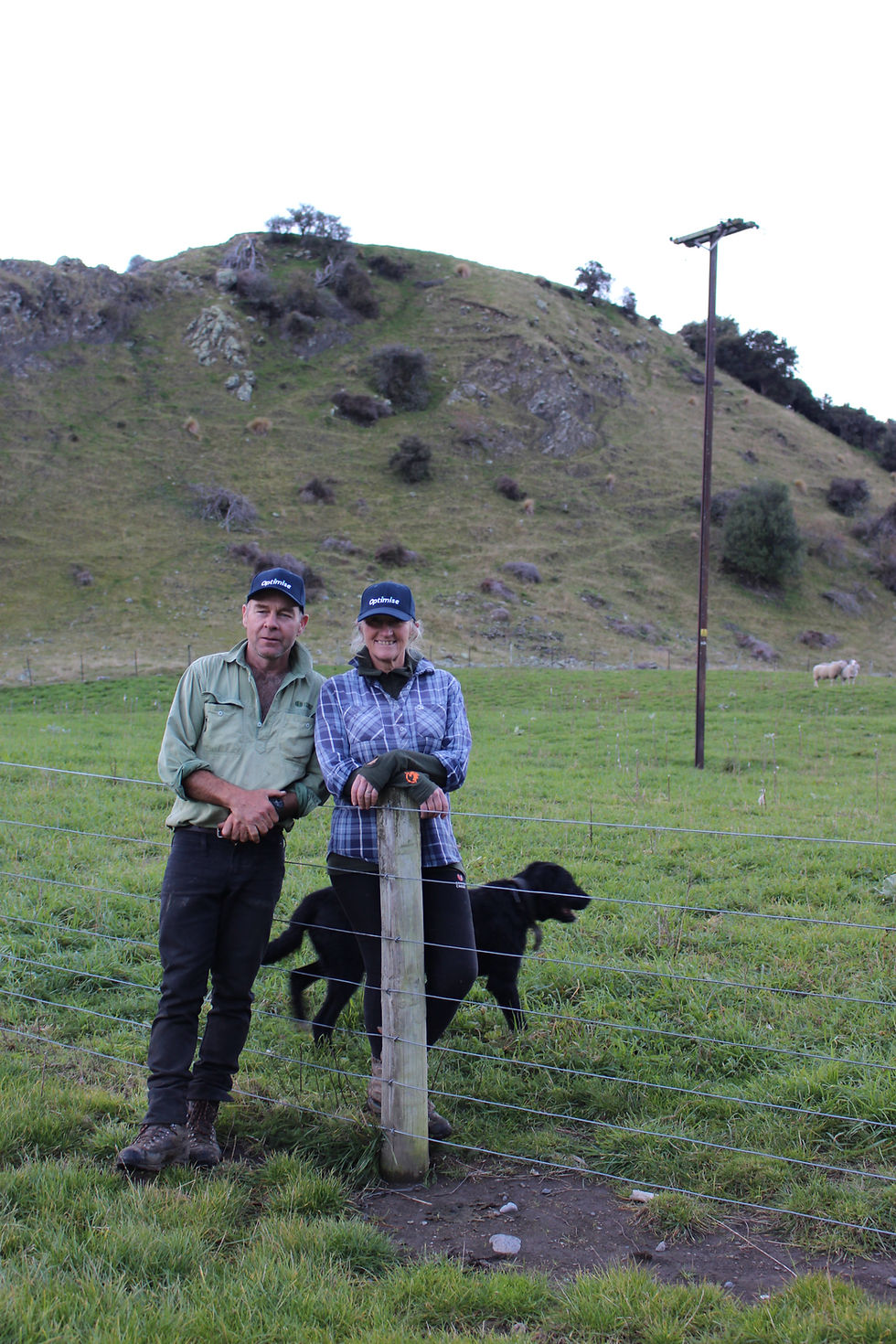
Now, after years of “beavering away under the radar”, the Harmers have stepped into the spotlight as regional finalists in the Ballance Farm Environment Awards.
For the Harmers, it’s just how they farm. If anything, Kerry describes their work as simply what makes sense for where they live.
“Everything you do, every decision you make is made through an environmental lens,” she says.
A high-country breeding operation
Castle Ridge Station spans 5,930 hectares and runs as one farm, made up of multiple blocks.
The Harmer family has farmed in the area since 1992. Paul’s parents, Peter and Mary Harmer, purchased Castle Ridge Station that year, later adding the Clent Hills block in 2004, and the Barrosa block in 2011.
Today the business is a breeding operation producing Merino wool, sheep, cattle and deer, with a strong focus on fine wool and a long-term supply relationship with Icebreaker.
Numbers shift with seasons, but the farm typically runs around 14,000 to 15,000 Merinos, about 800 cattle, and around 250 deer.
While the landscape is spectacular, Kerry is quick to point out that it’s not a “paint-by-numbers” farming operation.
“It’s dynamic and moving and shifting all the time,” she says.
Farming to the conditions
The Harmers talk about farming “to the conditions” - because they have no other option.
“You can’t manipulate the system. You have to farm with what you’re dealt,” Kerry says.
Castle Ridge is effectively split into two climatic zones. The higher country is lower rainfall and more exposed, while the lower Barrosa block receives significantly more rain. Most cattle are run down there, and in certain summers more cattle can shift up top to manage feed, then move back down again before winter.
The key point is that decisions are made with both climate and water quality in mind.
Cattle might be used strategically in summer, but Kerry says virtually no cattle are wintered on the more sensitive upper blocks.
“That’s for water quality as much as anything else,” she says.

Riparian fencing and native planting
Central to the farm’s environmental programme is riparian protection: practical work that’s built up over time.
Castle Ridge has fenced around 17 kilometres of waterways to reduce bank erosion and exclude stock. The work is ongoing, and fencing in this country doesn’t happen in neat straight lines.
“These streams aren’t straight. They meander,” Kerry says. “So, 17 kilometres sounds like a lot, but one paddock has four kilometres of fencing in it because of spring heads and wee legs of the same stream.”
Alongside fencing, the Harmers have planted more than 3,000 native plants in riparian areas, with a focus on Carex and other species that strengthen stream margins and slow nutrient movement into waterways.
Most of the creeks already carry natural vegetation, Kerry says, so the aim has been to fill gaps and build a corridor of native pockets down through the farm towards the lake.
“The hope is that in time we’ll end up with a corridor… not only good for nutrient management, but also shade for fish, and bird habitat,” she says.
They’ve also been collecting seed from the property in recent seasons, with a focus on planting locally sourced native species that suit the environment.
Winter grazing, catch crops, and wind erosion
The Harmers are also looking closely at wintering and feed systems, particularly in a catchment that sits under tight scrutiny.
Winter grazing is planned carefully, with particular attention paid to crop placement near waterways and the way soil is protected through the colder months.
A long-running part of their system is drilling winter crops with a catch crop - often grass -- sothe ground isn’t left bare heading into spring.
In this country, wind erosion matters as much as water.
“Wind erosion is an issue with the north-westerly in spring,” Kerry says. “So that catch crop helps with nutrient soak-up, but it also means we don’t have bare ground.”

Monitoring what’s actually happening
One of the strongest parts of the Castle Ridge story is the emphasis on data and measurement, not assumption.
The Harmers are involved in extensive surface and groundwater monitoring alongside their catchment group and the University of Canterbury, measuring water quality at multiple points as it enters, travels through, and leaves the farm.
The aim is simple: understand what is actually happening in their water, and what effect management changes are having over time.
That monitoring isn’t cheap, and it’s not always easy to do as individual farms in a small catchment. Kerry says the formation of the Ashburton Lakes Catchment Group in 2023, supported by the Mid Canterbury Catchment Collective, has been a turning point.
As chair of the Ashburton Lakes Catchment Group, Kerry says the wider structure has enabled access to funding that a small group of four farms could not have secured on their own.
“We’d been trying for years,” she says. “But we were only four farmers… a lot of criteria said you needed a minimum of 10 farmers, or you had to be an incorporated society.”
Through that structure, the catchment has secured significant MPI funding - support that has helped with planting costs and enabled monitoring and science work to get underway.
“We can’t do it overnight”
For Kerry, part of the frustration in the national conversation around water quality is the expectation of quick change, even in environments where improvements may take decades to show up.
“I think that’s the key thing,” she says. “Everybody thinks if you write all these things down, you can measure them again in 12 months’ time. If there hasn’t been change… you make the rules harder.”
In the Ashburton Lakes high country, she believes much of the change will take a generation.
“We can’t change it overnight. And we can’t do it on our own,” she says.
Kerry is not anti-planning. She says freshwater farm plans have their place, particularly in sensitive environments, but they need to be practical, tailored, and coordinated with existing assurance systems.
“It doesn’t want to be a tick-box exercise,” she says. “But it also doesn’t want to be really expensive… there has to be a level of trust and understanding.”
A family focus
The Harmers’ approach is heavily shaped by a long view - not only of the land, but of the family’s future on it.
All three of their children are connected to farming in different ways. Ben has returned home and is beginning to take on more responsibility within the business. Sam is a wool representative and wool classes on-farm, and also runs her own superfine Merino sideline flock. Annabel is studying animal science by distance through Massey University while in the UK, with an ongoing interest in veterinary science.
For Kerry, that connection to the next generation is part of the “why” behind the farm’s environmental work.
“We are just stewards for a short space of time,” she says. “Our job is to leave an environment in a better place for everyone who has a relationship with it, not just us as landowners.”
That stewardship idea isn’t new for the Harmer family. Castle Ridge has been in the family’s hands since 1992, but their farming roots in the wider area stretch back much further.
“It’s a really strong value,” Kerry says. “That we leave it better than we arrived… and that it follows on for each generation.”
Old skills, modern pressure
Even some of the farm’s day-to-day practices reflect that mix of tradition and pragmatism.
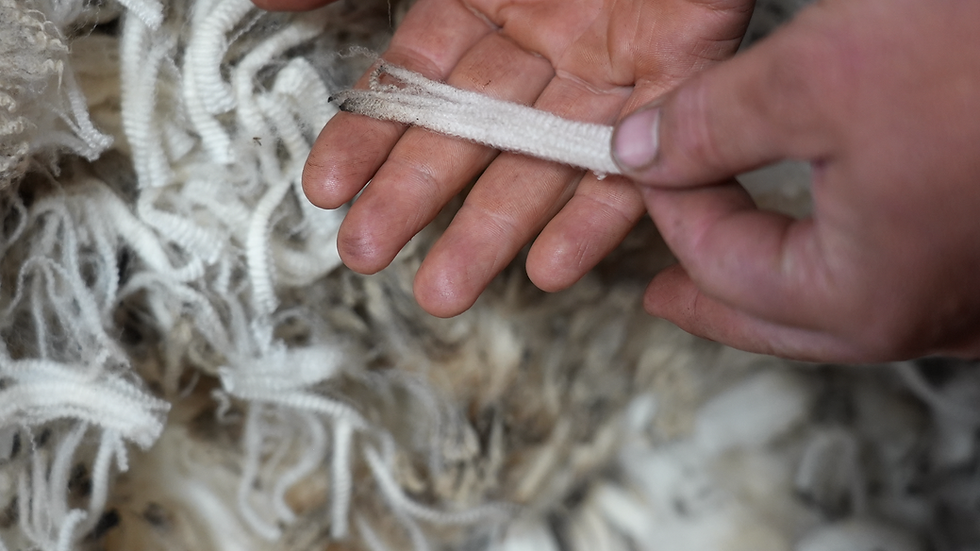
Castle Ridge still blade shears, largely for animal welfare in an environment where snow can strike unexpectedly.
“Blade shearing leaves a little bit more wool on,” Kerry says. “We do it for an animal welfare point of view, and it’s less stressful for the sheep.”
It’s a skill Kerry worries is disappearing, with fewer young shearers coming through to learn the craft.
Alongside that sits a modern focus on genetics and animal health, including long-term selection for footrot tolerance in their Merino flock - a project Kerry says the next generation is heavily invested in.
A positive story worth telling
The Ballance Farm Environment Awards are often described as a way to celebrate best practice - but for the Harmers, being a finalist also represents something else: a chance to put a positive story on the record.
Not the loudest farm – and not the most public. But a high-country business that has been steadily adjusting, monitoring, planting, fencing, and learning - because it has to, and because the place matters.
“We live here all the time and we love and respect it,” Kerry says. “We are only caretakers, here for a short time, looking after it for those who come after us.”

Comments