
The unwritten rules of home

My husband and I recently returned from a holiday in Vietnam. I found myself thinking about culture. Not the big obvious parts of culture, like language, history or food, the tiny unwritten rules people just know.
In Vietnam, one of those rules is crossing the road. A raging river of scooters, cars, bikes, people and horns greet you at any road. The first instinct is wait for a gap. Except, there is no gap. On our first day I ended up messaging a local friend to ask how one should cross the road. The answer, you have to step out into the oncoming traffic and trust that everyone will flow around you. Do not run, do not suddenly change your mind halfway across. Just commit, walk steadily, maybe pray, and somehow the whole thing works.
It feels absolutely unhinged the first time. Heart in throat and braced for the impending impact of car vs pedestrian. Then, after a few days, you find yourself doing it almost casually. You have mastered the art that no guidebook will tell you.
This got me thinking about our own kiwi culture, especially as we look forward to having the annual rural exchange interns arriving from Europe in the next few weeks.
Every year there are things we have to teach, things that are not written anywhere and are just “done.”
The rural road wave, for example. You lift one finger off the steering wheel as you pass another vehicle.
Our interns ask, “Do you know him?” and I said “No”. “So why did you wave?”
Good question. I have no idea. I just do. Not waving feels rude. Waving too much feels weird. It is a very delicate balance for people travelling at 100km/h in opposite directions.
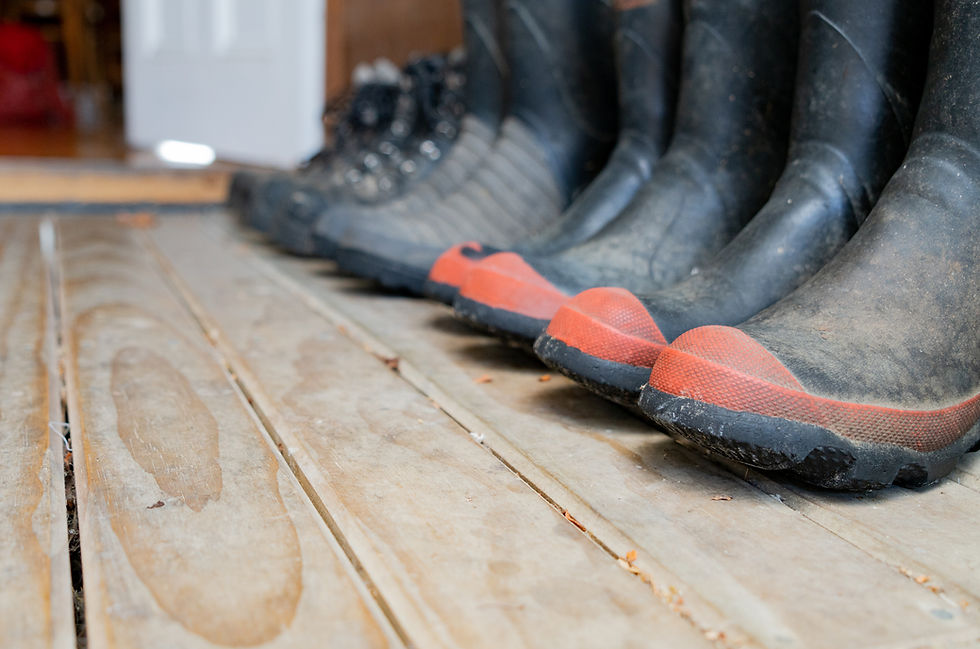
Then there is gumboots-off etiquette. In my mind this based almost entirely on flooring surfaces. Wearing your gumboots on rough concrete is fine. The moment you meet polished concrete, lino or tiles the gumboots come off.
This has provided recurring moments every year. I pull up outside the supermarket, vet clinic or farm supply store and tell the interns they need to take their gumboots off. They look at me like I am absolutely pranking them, pause, hesitate and wait for the joke to land.
Then I take my own boots off and walk into the shop in socks, and they look even more concerned. It is not until we get through the doors and they see the usual farmers’ sock brigade padding around the aisles that they realise I am not deranged.
Outside, there will be a tidy little line-up of gumboots by the door and when you come back out, yours are still there. Seems perfectly logical to me.
And then there is “yeah, nah.” This is particularly unfair on anyone with English as a second language. Not only does it sound completely contradictory, but “yeah” and “nah” are not exactly sterling examples of Oxford english.
Interns on receiving a “yeah, nah” in response to a closed question tend to look at us as if we have briefly lost control of the language or perhaps are having a mild stroke.
But to a Kiwi, it makes perfect sense.
“Yeah, nah” means no. “Nah, yeah” means yes. “Yeah, nah, maybe” means probably no, but I am trying not to sound difficult.
These are the small things that make a place feel like itself. Travel reminds me that our way is not the only way. It also reminds me that home, when viewed through fresh eyes, is fairly ridiculous in its own very familiar way.
From the inside, the rules feel obvious. From the outside, they look mildly mad. And somewhere between the road crossings, the finger waves, the abandoned gumboots and the deeply questionable English, you realise that is exactly what makes culture worth learning and settles you in as part of the place.
LeAnne Blakelock is a Taranaki based dairy farmer and accountant, and founder of the social media platform, the Calf Chronicles.


Comments