
When does land banking become a subdivision?


Hurunui District Council says Rosewood Terrace is about giving Amberley Beach residents somewhere to go if natural hazards eventually make relocation necessary. But with around 230 sections proposed, roughly half intended for sale on the open market, opposition from neighbouring rural residents and the beach residents’ association, and questions over how many beach residents will ever move, Plan Change 7 is proving anything but simple.
For Rose Hinton, the issue can be summed up in one sentence.
“The council is attempting to safeguard one community at the cost of another whilst alienating both.”
Hinton lives on Newcombes Road, close to the Rosewood property at 185 Ashworths Road, which Hurunui District Council purchased for $3.8 million in May 2025 as part of its long-term planning for Amberley Beach.
She is among a group of Hursley Terrace and Newcombes Road residents opposing Plan Change 7, which seeks to rezone part of the Council-owned property near Hursley Terrace Road from Rural to Residential 1.
But they are not the only ones asking questions.
The Amberley Beach Residents and Ratepayers Association has also submitted against PC7, despite Rosewood being promoted as a future relocation option for that community.
Under PC7, the rezoning would enable approximately 230 residential lots. Council says its purpose is to provide for the proactive relocation of Amberley Beach, which faces coastal erosion and inundation, river and rainfall flooding, and rising groundwater, in a way intended to be cost neutral to the wider community.
For now, Council is seeking rezoning rather than approval to build the subdivision. If PC7 is ultimately approved, Council says work on a subdivision application would follow, with councillors still to decide when any subdivision proceeds.
Council and the Amberley Beach community have spent several years considering how to respond to the settlement’s future hazard risks, culminating in a Coastal Adaptation Plan adopted in June 2023.
Hurunui District Council Chief Strategy and Community Officer Judith Batchelor said residents had previously shown support for land banking.
In 2023, 40 people responded when Council sought an indication of support in principle for a managed-retreat and land-banking initiative. Twenty-nine agreed “in principle”, six were not interested and five were unsure.
Batchelor said notes from a further Amberley Beach meeting in March 2025 recorded that most people in the room supported Council buying land.
But when asked whether residents knew at that point that Rosewood was the property being considered, she said no.
The particular parcel could not be disclosed during the purchasing process.
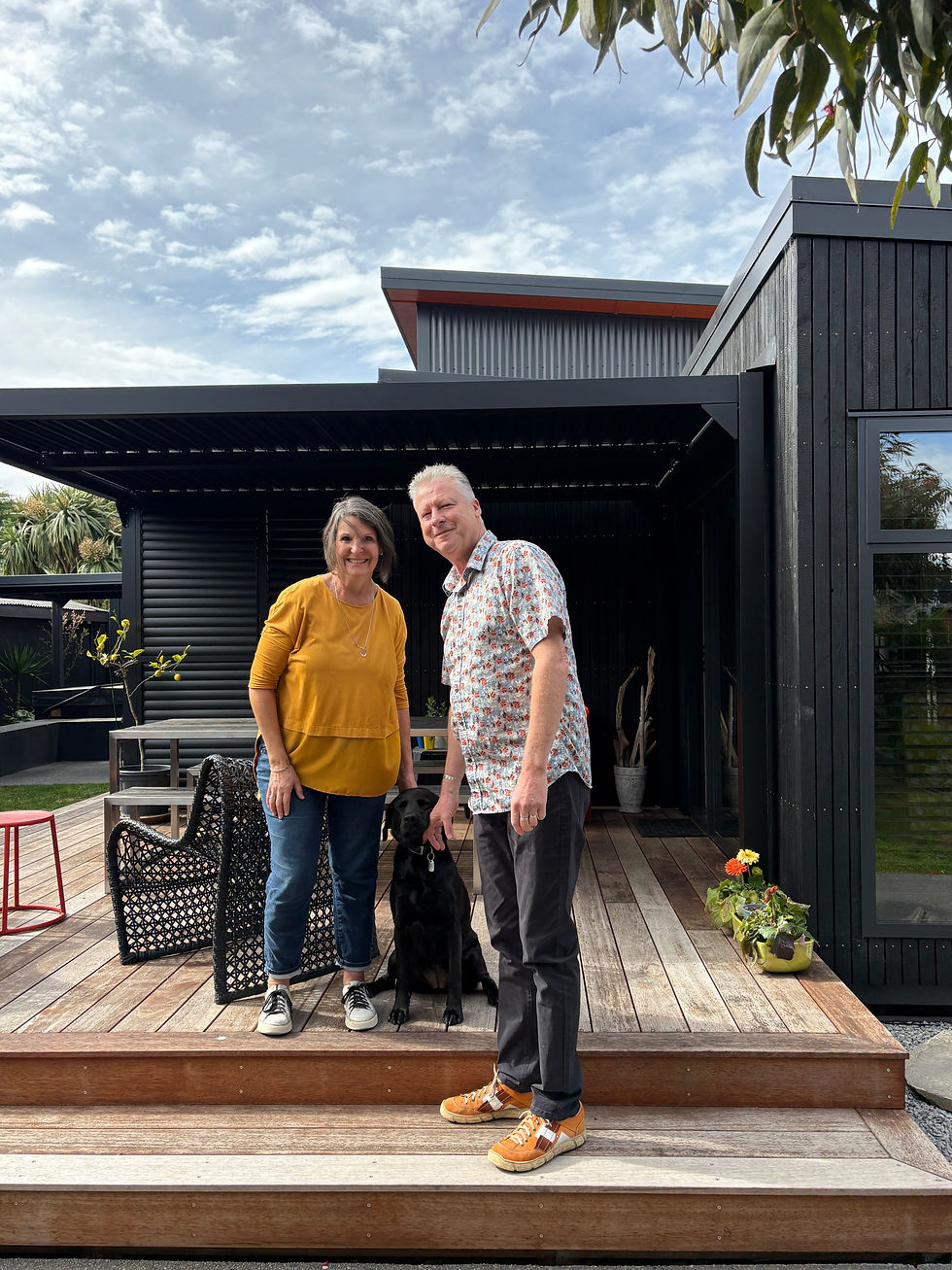
Amberley Beach Residents and Ratepayers Association chair Marc Coulthard said residents had supported exploring long-term options, but he believed the process had advanced far more quickly than many expected.
“We were sold on the plan that it was all based on things that may happen in the future,” he said.
Coulthard accepts Amberley Beach faces natural hazards, but questions the urgency of rezoning Rosewood when residents are not currently required to leave and the community’s coastal bund was renourished in early 2025.
Council takes a different view of the timing.
Batchelor said the adaptation process is trigger-based and other mitigation measures remain available, but having appropriately zoned land ready provides another option if circumstances change.
“Nothing happens until a trigger has been reached,” she said.
Asked why rezoning was needed before those triggers had been reached, she said Council needed residentially zoned land so proactive relocation could be available “if or when that’s needed”.
The economics behind Rosewood have become another focus of the debate.
Council’s 2023 managed-retreat proposal, developed before Rosewood was selected, envisaged enough land for 200 lots. Of those, 109 would be reserved for Amberley Beach property owners and the remaining 91 sold at market rate to help fund the overall development costs.
PC7 now provides for approximately 230 lots.
Batchelor said the current model envisaged around 120 sections being sold at full market price, with those sales helping fund the development and allowing Amberley Beach property owners to access cheaper sections.
“The model is dependent on those other sections being sold at full price to enable Amberley Beach residents to have a cheaper section”, she said.
Asked whether Council could proceed with a smaller development, Batchelor said the current number of sections was what worked economically.
The scale of Rosewood is therefore tied not only to the number of Amberley Beach properties, but to the financial model used to make the relocation option affordable.
It also raises the question of what Rosewood could eventually look like if only a small number of beach residents choose to participate.
Hinton recalled an earlier meeting where someone asked the council how many people would have to move to the proposed subdivision for it to proceed. She said the answer given was one, and that the development was described as financially viable because the remaining sections could be sold.
Coulthard separately said he had been given the same understanding.
Batchelor did not identify a minimum participation threshold when interviewed by Rural Guardian.
When asked whether very low uptake could mean Rosewood effectively became another commercial residential development, she acknowledged that possibility.
“Yes, it could,” she said.
But she stressed Council had not budgeted the cost of constructing the subdivision in either its Long Term Plan or current Annual Plan, and a decision to develop Rosewood would still need to come back to Council.
Whether eventual uptake was one, 50 or 100 households was currently speculation, she said.
Batchelor was equally clear about Council’s intention for Rosewood.
“The sole purpose of it is to provide for proactive relocation of the Amberley Beach community sometime in the future if they need to relocate,” she said.
The project also has access to significant borrowing.
In September 2025, the New Zealand Local Government Funding Agency announced Hurunui District Council would borrow up to $23.5 million through its Green, Social and Sustainability programme to fund proactive relocation for Amberley Beach residents.
LGFA classifies the project under climate change adaptation and said current risk responses at Amberley Beach were anticipated to no longer be effective in 20 to 30 years.
For Coulthard and wife Tracey, however, the debate is about more than planning models and financing.
The couple moved to Amberley Beach four years ago after more than 40 years living in the city. They had camped there with their children years earlier and were looking for a quieter life.
“We bought this thinking we’d found paradise,” Coulthard said.
What they value most is the community.
“We have got fantastic neighbours that talk to one another,” he said.
“No footpaths, no guttering. People walk down the road,” Tracey added.
They have no intention of leaving.
But Coulthard worries the existence of an official relocation option could itself affect how prospective buyers view Amberley Beach properties.
“If we don’t want to go, the biggest fear is that people will not want to buy our property here,” he said.
Council says remaining close to Amberley Beach was one of the strongest themes to emerge from earlier engagement with residents and significantly influenced the area in which alternative sites were considered.

Hinton and the Chisnalls also questioned how closely Rosewood would replicate the coastal connection people had chosen Amberley Beach for.
They said the proposed native planting would screen much of the direct beach outlook from the development, leaving two view corridors where residents could walk to see the coast.
“They won’t have actual views out to the beach, but they will have two view corridors where they can walk to view the beach if they want to,” Hinton said.
Under Council’s 2023 proposal, eligible section owners could pay a targeted rate of $1 a day for 30 years, inflation adjusted, or make a one-off payment of $11,000.
The proposal said this would secure a fully serviced section in the future subdivision in exchange for their Amberley Beach land, with their share in the new land tied to their existing beach property until titles were issued.
But the final legal arrangements have yet to be developed.
“We haven’t done the work,” Batchelor said. “What does the covenant look like? How will it be tied to the land? None of that work has been done.”
On Hursley Terrace Road, Wayne and Jenny Chisnall’s farm directly neighbours the proposed Rosewood subdivision site.
They have farmed there for around two decades, and Wayne said their approximately 80-hectare property has carried cattle and a successful Southdown stud, while lucerne and winter feed are also grown.
“This land here can grow real good animals,” he said.
The couple fear placing a sizeable residential development alongside working farms could create reverse-sensitivity issues, along with years of construction traffic, machinery, noise and dust.
Wayne said farmers operating lawfully in a rural environment should not have to restrict established farming practices because residential development had subsequently been introduced beside them.
Federated Farmers has raised similar concerns.
Its submission opposes PC7 and argues Council has not sufficiently demonstrated that rezoning highly productive land is necessary under the National Policy Statement for Highly Productive Land.

It also argues that Council is proposing to rezone about twice the land area required to rehouse Amberley Beach residents because additional sections are needed to achieve cost neutrality.
Federated Farmers says this does not satisfy the NPS-HPL requirement that the extent of highly productive land rezoned for urban development be the minimum necessary.
It also raises concerns about reverse sensitivity from noise, dust, stock movements, odour, spraying and machinery, along with additional traffic and potential costs to rural ratepayers.
Groundswell New Zealand has also opposed PC7.
Its submission argues Rosewood could function as a new residential area rather than simply a relocation settlement if relatively few Amberley Beach households eventually move there, and says development closer to Amberley’s existing urban footprint should be considered instead.
Batchelor said much of the land surrounding Amberley is classified as highly productive and the National Policy Statement does not prevent all residential development on such land.
She said traffic, reverse sensitivity and other effects would be considered through the plan-change process and supporting technical reports.
Neighbouring residents also remain unhappy about how late they entered the conversation.
Hinton said some residents first became aware of the formal proposal around the opening of submissions.
Batchelor said consulting neighbours before Council purchased Rosewood would not have been realistic because revealing Council’s interest in the property could have compromised its ability to secure the land economically.
Residents now had the opportunity to participate through the plan-change process, she said.
They have done so in numbers.
Of 107 current submissions on PC7, 89 oppose the plan change, about 83 percent.
Asked whether the level of opposition had prompted Council to reconsider either the site or scale of Rosewood, Batchelor said: “Council hasn’t had that conversation.”
For Jenny Chisnall, opposition to PC7 should not be mistaken for opposition to helping Amberley Beach.
“This is not about opposing growth,” she said.
“It’s about whether this is the right place, the right land and the right process for this growth.”
Submissions on PC7 closed on August 21. Council is now preparing a summary of submissions, after which eligible parties will have an opportunity to make further submissions.
An independent hearings commissioner or panel will then hear the matter and make a recommendation to Council.
For Council, rezoning Rosewood now is about keeping a proactive relocation option available before it is needed.
For opponents, the concern is that it could permanently change productive rural land before anyone knows how many Amberley Beach residents will ultimately take up that option.
That tension is likely to remain at the centre of the debate over Rosewood.


Comments